



Table of Content
Best Lightweight Hardside Luggage: 5 Carry-Ons That Save Weight in 2026

The best lightweight hardside luggage should reduce the strain of lifting your suitcase while preserving more of your airline weight allowance for the items you actually need. However, a low empty weight alone does not make a suitcase practical. Capacity, wheel performance, handle stability, overall dimensions, and shell construction all matter.
The Samsonite Proxis Global is our best overall choice because it weighs less than 5 pounds while staying within the familiar 22 × 14 × 9-inch carry-on dimensions. The other options in this guide may be better for short trips, larger packing loads, tighter budgets, or travelers who prefer textured polycarbonate luggage.
Best Lightweight Hardside Luggage for 2026
A hardside carry-on weighing less than 6 pounds can generally be considered genuinely lightweight. Models between 6 and 8 pounds may still qualify when the added weight supports better organization, expansion, stronger hardware, or a more structured shell.
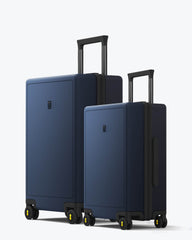
Travelers comparing sizes and designs can also browse LEVEL8’s carry-on luggage collection before deciding which balance of weight and capacity works best.
| Product | Recommendation | Weight | Capacity | Overall Dimensions | Material | Main Tradeoff |
|---|---|---|---|---|---|---|
| Samsonite Proxis Global | Best overall | About 4.7 lb | Not consistently listed | 22 × 14 × 9 in | Roxkin multilayer material | Premium price |
| RIMOWA Essential Lite Cabin U | Lightest compact option | 4.4 lb | 28L | 20 × 14 × 7.9 in | Polycarbonate | Limited capacity |
| July Carry On Light Expandable | Best capacity-to-weight balance | 4.9 lb | 40L | 21.3 × 14.2 × 9.7 in | Lightweight hard shell | Depth exceeds some limits |
| Samsonite Freeform | Best budget expandable option | 6.5 lb | Not consistently listed | 23 × 15 × 10 in | Polypropylene | Oversized for many carriers |
| LEVEL8 Luminous Textured 18-Inch | Best compact textured polycarbonate value | 7.1 lb | 39L | 20.2 × 13.7 × 9.2 in | Makrolon polycarbonate | Heavier than ultralight models |
Weight should not be considered in isolation. The RIMOWA is exceptionally light, but its 28L capacity makes it more suitable for short trips. The July weighs only about half a pound more while providing 40L of packing space. The LEVEL8 model is heavier, but it combines a compact exterior with a structured Makrolon polycarbonate shell and nearly the same capacity as the July.
Samsonite Proxis Global Carry-On — Best Overall Lightweight Hardside Case
At approximately 4.7 pounds, the Samsonite Proxis Global is one of the lightest full-size carry-ons in this comparison. Its overall dimensions are 22 × 14 × 9 inches, making it a more conventional cabin-size choice than lightweight cases that exceed common airline measurements.
Under a 10-kilogram cabin baggage allowance, a 4.7-pound suitcase leaves nearly 8 kilograms available for clothing, shoes, electronics, and toiletries. Compared with an 8-pound carry-on, that provides roughly 3 additional pounds of packing allowance.
The Proxis uses Samsonite’s Roxkin multilayer shell material, which is designed to flex under pressure and return to its original shape. It also includes double spinner wheels, a dual-tube telescoping handle, a TSA-compatible lock, USB connectivity, and approximately half an inch of expansion.
Expansion is useful when airline rules allow additional depth, but travelers should measure the suitcase again after opening the expansion section. The USB port also requires a separate removable power bank.
Best for: Frequent flyers who want the lowest practical weight without moving down to a significantly smaller suitcase.
RIMOWA Essential Lite Cabin U — Lightest Option for Strict Dimensions
The RIMOWA Essential Lite Cabin U weighs approximately 4.4 pounds, making it the lightest suitcase in this comparison. Its 20 × 14 × 7.9-inch dimensions are also more conservative than the dimensions of many standard domestic carry-ons.
The tradeoff is its 28L capacity. That may be enough for one or two days of clothing, a compact toiletry kit, and a small pair of shoes, but it is less suitable for travelers who routinely pack for four or five days.
Its low empty weight is partly possible because the suitcase is smaller. This is an important distinction: the lightest suitcase is not automatically the most weight-efficient option when usable packing space is considered.
The Essential Lite Cabin U includes a T-shaped telescoping handle, RIMOWA’s Multiwheel system, TSA-approved locks, and a zippered mesh divider. The single-pole handle saves space and weight, although it provides less support for a personal bag placed on top of the suitcase.
Best for: Short trips, strict international cabin dimensions, and travelers willing to limit packing volume.

July Carry On Light Expandable — Best Capacity-to-Weight Balance
The July Carry On Light Expandable weighs approximately 4.9 pounds while offering around 40L of packing capacity. This gives it one of the strongest capacity-to-weight relationships among the suitcases considered here.
Its listed dimensions are approximately 21.3 × 14.2 × 9.7 inches. The height remains practical for many overhead compartments, but the width and depth may exceed the published limits of stricter airlines.
For travelers working with a 10-kilogram cabin allowance, the empty suitcase leaves roughly 7.8 kilograms for packed belongings. Its 40L interior can support approximately three to five days of travel when clothing is selected carefully.
The suitcase includes spinner wheels, an adjustable telescoping handle, a TSA-compatible lock, and an expandable packing section. The expansion feature improves flexibility, but it may move the suitcase even further outside an airline’s size limit.
Best for: Travelers who want maximum usable capacity without moving into the 7- or 8-pound weight range.
Samsonite Freeform Carry-On — Best Budget Lightweight Expandable Case
The Samsonite Freeform weighs approximately 6.5 pounds. It is not as light as the Proxis, RIMOWA, or July models, but it is still relatively manageable for an expandable polypropylene suitcase.
Its open interior provides flexible packing space, while cross straps, a divider panel, and smaller organizational pockets help control the contents. It also includes approximately one inch of expansion and double spinner wheels.
The main concern is size. Listed dimensions of approximately 23 × 15 × 10 inches exceed the familiar 22 × 14 × 9-inch limit used by many airlines. Travelers should not assume it will qualify as a carry-on simply because it is marketed in that category.
Best for: Budget-conscious travelers who prioritize expansion and interior flexibility over strict airline compatibility.
LEVEL8 Luminous Textured 18-Inch — Best Compact Textured Polycarbonate Value
The LEVEL8 Luminous Textured Carry-On weighs approximately 7.1 pounds in its compact 18-inch configuration. Its overall dimensions are about 20.2 × 13.7 × 9.2 inches, and its listed capacity is approximately 39L.
Its German-made Makrolon polycarbonate shell provides a more structured feel than many ultralight designs. The diamond-textured finish can make ordinary scuffs and surface wear less visible, although no textured shell can completely prevent scratches.
The suitcase also includes a three-stage telescoping handle, anti-shock spinner wheels, a TSA-approved lock, a zippered divider, and interior organization pockets. These structural and organizational components help explain why it weighs more than minimalist ultralight cases.
Best for: One- to three-day trips and travelers who prefer a compact, textured Makrolon polycarbonate suitcase over the absolute lowest possible weight.
Where the Missing Pounds Go
The shell is only one part of a suitcase’s total empty weight. Telescoping handles, wheels, reinforcement points, frames, locks, dividers, compression systems, and expansion panels can all add weight.
Understanding which features account for those extra pounds helps distinguish useful structure from unnecessary bulk.
A Smaller Shell Can Look More Efficient Than It Is
Always compare empty weight with usable capacity. A 4.4-pound suitcase may appear more efficient than a 4.9-pound model, but the conclusion changes if the first provides 28L and the second provides 40L.
Calculating liters of capacity per pound can provide a rough comparison, but it should not be treated as an exact measurement. Brands may calculate capacity differently, and internal hardware can reduce the amount of space that is genuinely usable.
Handles, Frames, and Dividers Add Functional Weight
A dual-tube telescoping handle will often weigh more than a single T-shaped handle, but it may also provide greater stability and better support for a backpack or personal item placed on top.
Interior dividers, compression panels, pockets, locks, and reinforced wheel housings add ounces as well. Rigid frames and latch systems found in zipperless luggage can also increase empty weight, but they provide a different closing structure and packing experience.
The goal is not to eliminate every component. It is to decide which features provide enough practical benefit to justify their weight.
Thin and Flexible Do Not Automatically Mean Fragile
Polycarbonate, polypropylene, and multilayer composite shells respond differently to pressure. Some are designed to flex when compressed instead of remaining completely rigid. Visible bending does not automatically indicate poor construction.
Likewise, a thick and rigid suitcase is not necessarily immune to damage. Long-term durability depends on the complete build, including the shell material, corners, handles, wheel mounting points, zippers or latches, and the conditions under which the bag is handled.
For a closer comparison of two widely used lightweight shell materials, see LEVEL8’s guide to polypropylene vs. polycarbonate luggage.

Pick by the Limit You Actually Face
The best lightweight suitcase is the one that addresses the restriction you encounter most frequently. For some travelers, that is the airline’s weight allowance. For others, it is the published size limit or the physical difficulty of lifting a packed case.
LEVEL8’s guide to the best lightweight luggage for international travel provides additional options for trips involving multiple airlines, airport transfers, and different baggage limits.
When the Airline Limits Weight
Start by subtracting the suitcase’s empty weight from the airline’s maximum cabin allowance.
Under a 10-kilogram limit, a 4.5-pound suitcase leaves approximately 17.5 pounds for packed belongings. A 7.5-pound suitcase leaves only around 14.5 pounds. That difference can determine whether you can pack an extra pair of shoes, a laptop charger, or several additional clothing items.
Travelers carrying dense items should generally prioritize low empty weight over expansion. Extra volume does not help if the suitcase reaches the weight limit before the interior is full.
When the Airline Limits Every Inch
A low empty weight does not compensate for excessive dimensions. A 5-pound suitcase may still be rejected at the gate if its wheels, handles, or expanded body push it beyond the airline’s size restrictions.
Compare the complete external dimensions, including wheels and handles, with the smallest allowance used by the airlines on your itinerary. This is especially important when a trip includes both a full-service airline and a regional or low-cost carrier.
If the volume you need cannot fit inside the permitted cabin dimensions, choosing properly sized check-in luggage may be more reliable than trying to board with an oversized carry-on.
When Lifting Comfort Matters More Than the Scale
Spinner wheels reduce effort while the suitcase is on the ground, but they do not help when you need to lift it into an overhead compartment, carry it upstairs, place it in a vehicle, or move it across a train platform.
A difference of one or two pounds can become noticeable during repeated lifting. Travelers with limited upper-body strength, shoulder mobility issues, or frequent multi-stage journeys may therefore benefit from choosing the lightest case that still provides the necessary space and organization.
Conclusion
The Samsonite Proxis Global provides the best overall balance of low empty weight, conventional carry-on dimensions, and useful travel features. The RIMOWA Essential Lite Cabin U is better for short trips and conservative cabin dimensions, while the July Carry On Light Expandable provides the strongest balance of weight and capacity.
The Samsonite Freeform is a more affordable expandable option, but its exterior dimensions will be too large for many carriers. The LEVEL8 Luminous Textured 18-Inch is better suited to travelers who value a compact Makrolon polycarbonate shell, a textured finish, and organized packing space more than achieving the lowest possible weight.
Travelers who need both cabin and checked sizes can also compare coordinated luggage sets instead of purchasing separate suitcases for different trip lengths.
Do not choose hardside luggage by empty weight alone. Confirm the overall dimensions, compare usable capacity, examine the handle and wheel design, and decide which structural features are worth carrying. The right suitcase should save weight without creating new problems at the airport.
Frequently Asked Questions
What weight is considered lightweight for hardside luggage?
A hardside carry-on weighing less than 6 pounds can generally be considered genuinely lightweight. Models between 6 and 8 pounds may still be reasonable choices when the additional weight supports expansion, better organization, stronger wheels, or a more structured shell.
Is polypropylene lighter than polycarbonate luggage?
Polypropylene is often lighter than polycarbonate, but material type alone does not determine the final suitcase weight. Shell thickness, size, handles, wheels, expansion systems, locks, and interior components all affect the total.
Does lighter hardside luggage crack more easily?
Not necessarily. Flexible polycarbonate, polypropylene, and multilayer materials may bend under pressure instead of cracking. Durability depends on the full construction of the suitcase rather than empty weight alone.
Are lightweight expandable suitcases still carry-on compliant?
They are carry-on compliant only when their complete expanded dimensions remain within the airline’s published limit. Opening an expansion section can increase the suitcase’s depth enough to make it unsuitable for cabin use.
How much suitcase weight should I allow under a 10kg cabin limit?
A suitcase weighing approximately 5 pounds, or 2.3 kilograms, leaves around 7.7 kilograms for packed belongings under a 10-kilogram allowance. Always confirm whether the airline applies that limit only to the suitcase or to the combined weight of your cabin bag and personal item.

Leave a comment